Three Principles of Maharishi Sthapatya Veda*
Benefits
Housing in Harmony with Natural Law
The Vastu Effect
Research
Frequently Asked Questions
Links to related sites
What is Sthapatya Veda?
Sthapatya Veda or Vedic
architecture is the oldest and the most systematic of the world's architectural systems.
The information on Vedic architecture comes from Manasara and the Maya Mata and other
ancient Sanskrit texts that describe the knowledge (Veda) of establishing form (Sthapatya).
These texts apply to all created structures, natural and man made, and their primary
application is in the area of architecture and community design.
Much of the knowledge of Vedic architecture or Vastu had been fragmented or lost
until recent times. Maharishi Mahesh Yogi, founder of the world-wide Transcendental
Meditation program, worked with the foremost experts of Sthapatya Veda in India to open
this timeless knowledge to the world. By systematically reviewing and evaluating all the
pieces, Maharishi unified and restored Vedic architecture to its wholeness.
The system as he has restored it is referred to as Maharishi Sthapatya Veda architecture,
Maharishi Vedic architecture or Maharishi Vastu architecture. The preface of Maharishi is
used to give respectful credit to Maharishi Mahesh Yogi, who revived the oldest system of
knowledge, the forty limbs of the Veda and Vedic literature, and restored them to
completeness.
Are there any special features in Maharishi Sthapatya Veda design?
Maharishi Sthapatya Veda architecture involves a number of special features in the design.
The brahmasthan is a silent core of intelligence where wholeness resides. We see this
silent centre in the structure of galaxies, solar systems, cells, and atoms. In a
Fortune-Creating building, this element helps the building to become a holistic structure
of Natural Law.
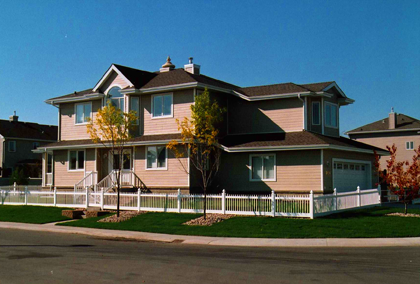
A vastu fence around the exterior of the building
allows entrance to the building only from the most auspicious direction, and marks the
extension of the influence of coherence and protection provided by the building.
The Kalash, a Vedic form installed on the roof of a house, is a signature of
Maharishi Vedic architecture. Meaning a vessel in Sanskrit, the Kalash enlivens the
connection of the house with the cosmos.
Are natural and non-toxic building materials important in Maharishi Sthapatya Veda architecture?
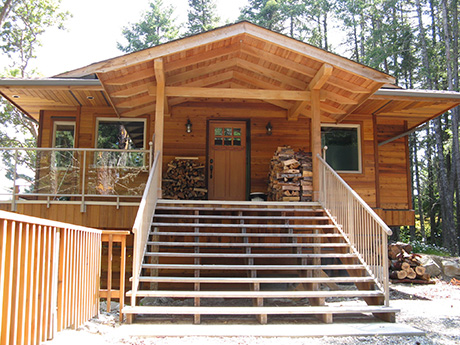
Maharishi Sthapatya Veda design strongly supports the use
of natural and non-toxic materials in the construction of
buildings. When Vedic architecture was practiced in ancient times,
it was naturally "green." There were no synthetic materials in existence.
Integrating the 21st century technologies of sustainability
and the timeless system of Sthapatya Veda ensures that we will best
nourish Planet Earth. As green building design is becoming more
mainstream, increasing numbers of Maharishi Vastu homes are also being
constructed using sustainable technologies.
How can I have my own Sthapatya Veda home?
Check out the Getting Started
page or contact us for more information.
"Within a few short months, I realized that being in Vastu
completely revised the way I lived. It became clear that living in
Vastu was simply a matter of getting any desire fulfilled. Thinking
too much, analyzing, intellectualizing about what to do, etc. became
less and less. What would dominate was more peace, silence, bliss, and
whatever the thought was, it would be fulfilled." - Vastu homeowner

|